GarageExplainer25 September 2026
After Mezger
Porsche’s GT3 history identifies the 2013 model as the break from a Mezger-based engine. Its 2017 GT3 technical account shows that a family break did not end Motorsport’s habit of carrying particular engineering ideas forward.
01A useful name, used carefully
A family name can make Porsche history sound tidier than it is. “Mezger” is useful precisely because Porsche has used it in its own historical account: the company identifies the 2013 911 GT3 as the first GT3 no longer based on the legendary Mezger engine. That is a meaningful boundary in the manufacturer’s language, not an insult retrospectively attached to a later car.
It is also a boundary, not a complete technical verdict. A label can identify an engine architecture and a period of Motorsport history without deciding whether every subsequent flat-six is important, desirable, or somehow less authentic. Those are larger judgments than the name can carry. The trouble starts when an affectionate shorthand is made to do the work of a parts drawing, a development history, and a road test all at once.
02The date matters
The chronology deserves care because it is often flattened. Porsche’s detailed account of the 4.0-litre GT3 engine was published in 2017 and describes that 2017 engine. Its seven-point oil extraction, oil-air centrifuge, and connecting-rod oil-feed detail do not belong to a 2006 GT3 by implication or by backdating. They are specific elements of the later account.
That correction makes the story stronger. Porsche can state a 2013 break from Mezger ancestry and, four years later, describe a GT3 engine developed by Porsche Motorsport that carries particular racing solutions forward. There is no contradiction to explain away. Engineering does not advance by preserving a family tree intact; it advances by deciding which problems still deserve a good answer.
03Read the oil system as machinery
Porsche describes a dry-sump arrangement in which a vane-cell pump extracts oil at seven points. An integrated centrifuge separates oil from air. The stated purpose is practical: controlling oil under high lateral acceleration and allowing a low installation position. None of that is decorative language. It is a description of how the lubrication system is arranged to keep oil where the engine needs it when the car is being used hard.
The details also resist the temptation to turn “dry sump” into a charm word. The phrase does not, by itself, tell a reader how a particular engine scavenges oil, what it does with entrained air, or why its layout matters. Porsche supplied those particulars for this GT3. They are more illuminating than a generic claim that racing technology has somehow been sprinkled over a road car.
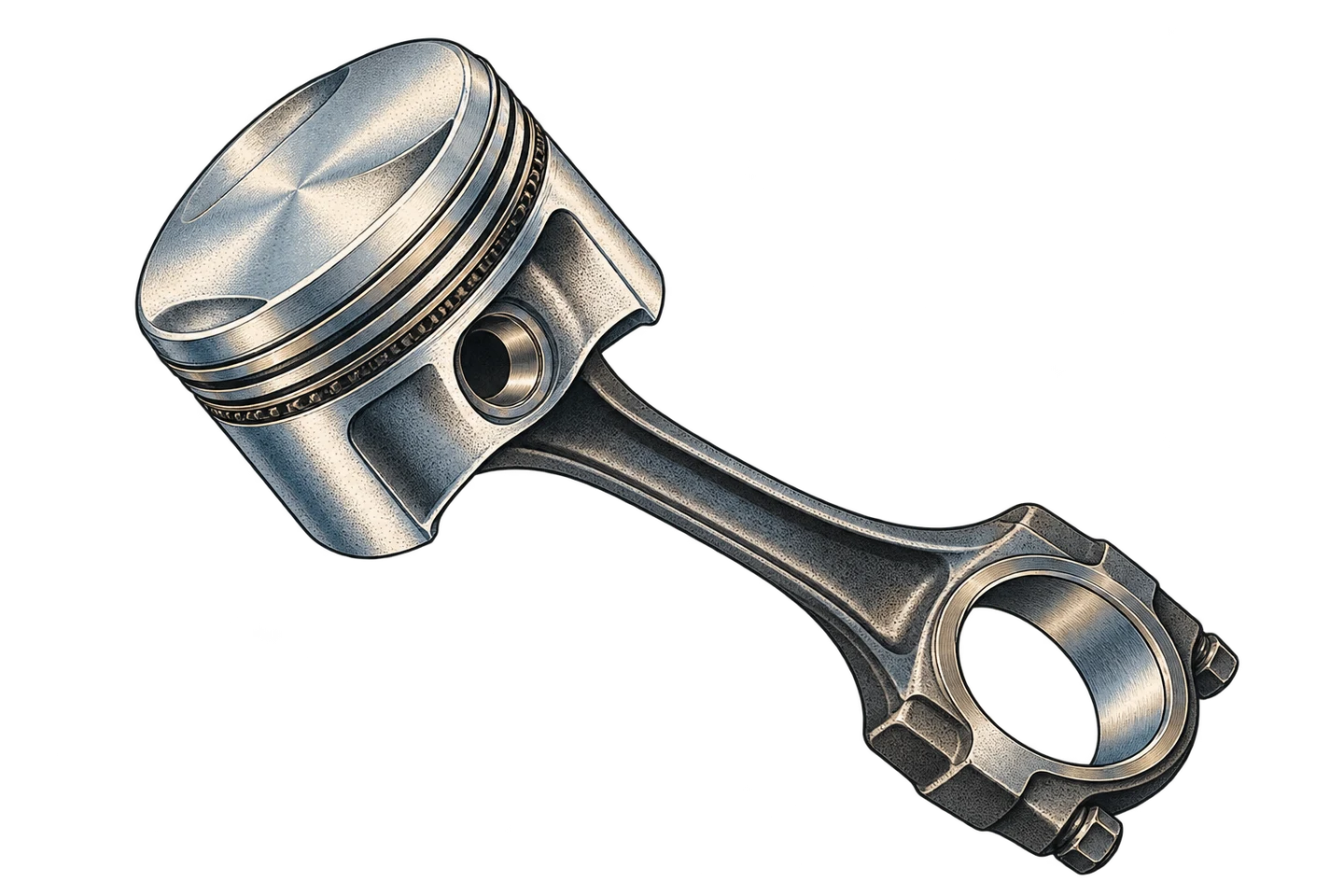
One exact connection concerns the feed to the connecting-rod bearings. Porsche says the central oil feed was taken directly from its race cars and identifies the 917 flat-twelve as an earlier use of that detail. This is a proper lineage claim because it is narrow enough to inspect: one engineering solution, named by the maker, with a named antecedent. It is not a claim that the 2017 GT3 is a 917 in miniature.
04Continuity is not sameness
The 917 reference is valuable because it describes continuity at the level where continuity is useful. Race programmes generate solutions to recurrent problems—lubrication, heat, stiffness, packaging—and some can outlive the original engine family. The passage of an idea from a flat-twelve to a later flat-six says something about Porsche Motorsport’s technical memory. It does not erase differences in era, use case, emissions requirements, materials, controls, or the rest of the engine.
That distinction is more respectful of both cars. The 917 does not need a modern descendant to validate its place in racing history. Nor does the 2017 GT3 need to borrow an ancestor’s aura when Porsche has described its own system in enough detail to merit attention. One is a historical reference; the other is a contemporary piece of machinery.
05What the break actually clarifies
Calling the 2013 change a break need not become a purity contest. It clarifies the question a reader is really asking. Is the subject a particular engine family, a Motorsport approach, a specific lubrication solution, or the broader cultural meaning enthusiasts attach to “Mezger”? Those are related subjects, but they are not interchangeable.
Porsche’s documents support a modest conclusion. A factory may draw a real genealogical line, then carry selected hard-won ideas over that line. The 2017 GT3’s oil system is not sentiment dressed as engineering: it is seven extraction points, a centrifuge, and a stated race-car precedent. The name marks where one ancestry ended. The mechanism shows what Porsche still considered worth carrying forward.
Sources
Go deeper
GarageFeature
The Particular One
Return to the 997 GT2's actual launch specification after separating family names from engineering details.
Read the feature
ObjectsExplainer
The Name on the Engine
From inherited engineering ideas to the different question of who assembles an engine.
Read the explainer