ObjectsExplainer25 September 2026
The Name on the Engine
At Affalterbach, a hand-signed AMG plaque records a maker's defined assembly practice—one that uses digital quality processes without becoming less human.
01What a plaque records
A name on an engine plaque invites a very easy story: one person, one motor, a workshop untouched by modern industry. It is an attractive story because the plaque makes industrial work legible in one glance. But Mercedes-AMG’s current description of Affalterbach is more useful than that romance. It says V8 and R4 engines are assembled there according to the One Man, One Engine principle, and that each receives a hand-signed plaque.
That is a specific statement with a specific scope. R4 means an inline four-cylinder layout in this description. It does not establish the process for every AMG engine ever made, every engine bearing AMG association, or every engine in a Mercedes-Benz product. Precision is not a loss of mystique here. It is what turns the plaque from an atmospheric symbol into evidence of a defined manufacturing practice.
02Hand assembly inside a system
The missing half of the picture appears in Mercedes-AMG’s 2023 account of the factory connected with the new AMG GT. Under the heading of digital and intelligent manufacturing, the company describes hand assembly working alongside Industry 4.0 processes for quality, material flow, and ergonomics. This retires the false choice between a named builder and a modern factory.
Information, parts, and quality controls can be organised digitally while an individual carries out the engine assembly that the plaque identifies. The builder has not been edited out by the system; nor has the system disappeared because an individual builder is visible. The useful idea is coordination. Repeatability is not the opposite of skilled work when the process is designed to let skilled work happen consistently.
It also explains why the plaque is not a claim that its signer designed every component or personally supplied every material. Modern engine production has many authors: designers, calibration engineers, suppliers, logistics workers, quality teams, and the person responsible for assembly. A plaque does not deny that division of labour. It makes one important responsibility visible.
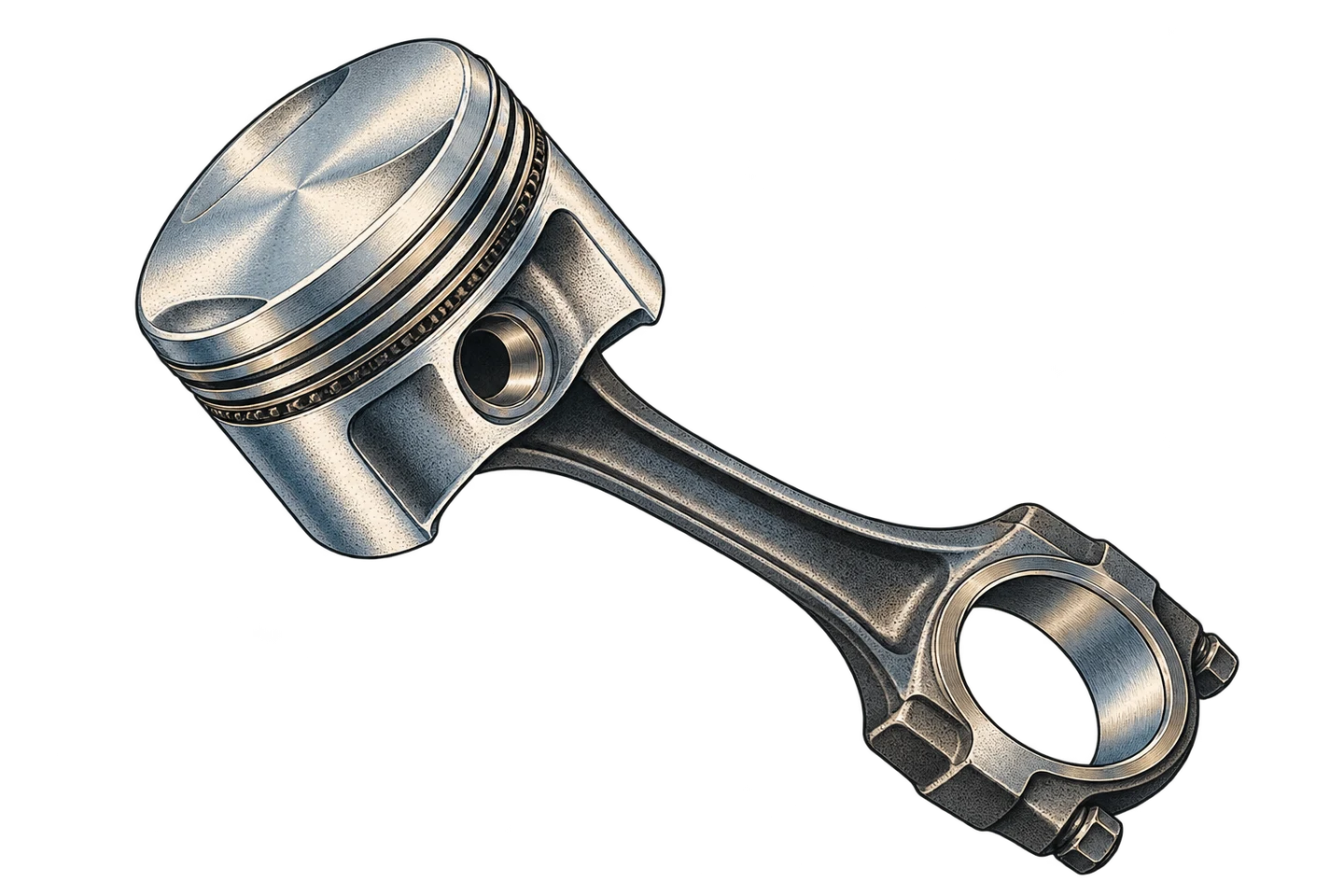
Illustration — Studio Chicane / AI-generated. An imagined component, not a specific AMG part.
03A trace rather than a talisman
The signature can be read as a trace of accountability. Mercedes-AMG says that the named assembler built the engine under its stated process. That is more concrete than a generic marketing phrase about craftsmanship. At the same time, it cannot by itself promise that one signed engine will be stronger, more durable, or more special in measurable use than another. A signature is not a laboratory result, a reliability forecast, or a substitute for service history.
This distinction protects the good part of the idea. The plaque matters because it acknowledges labour that mass production often makes anonymous. It does not need magical powers to matter. In an era when a finished car can feel like the product of an invisible network, a human name provides a deliberate point of contact between object and maker.
There is a cultural dimension too. “Hand-built” is often used as shorthand for something pre-industrial: slow, isolated, and untouched by data or planned flow. Affalterbach’s stated process offers a different definition. A contemporary factory can use digital support for material movement, quality, and ergonomics while retaining an individual assembly responsibility for selected engines. Craft survives not outside the factory system, but within it.
04The name remains
What remains after those limits is more interesting than the fairy tale. The signed plaque is not a relic from before modern production. It is evidence that modern production can choose to make an individual assembler visible. It records a human responsibility within a larger engineered process, and it asks the viewer to recognise both at once. The name does not make the engine magic. It makes the work legible.
Sources
Go deeper
GarageExplainer
After Mezger
An engine's design ancestry is a different question from the identity of its assembler.
Read the explainerGarageNote
The Shape, the Specification
Keep the documented 2016 G550 specification distinct from AMG's separately described assembly practice.
Read the note