GarageFeature
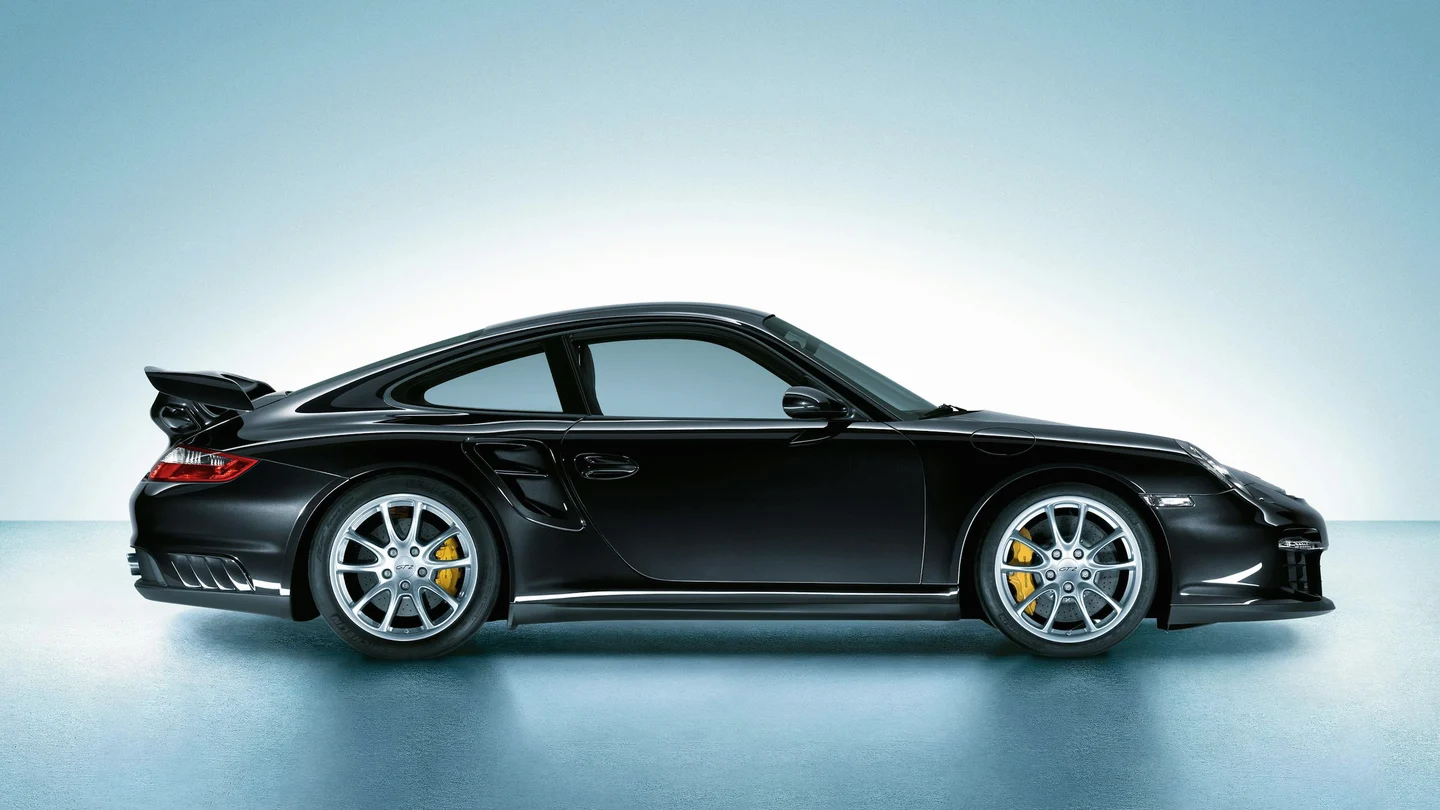
The Particular One
The 997 GT2’s Turbo-derived 3.6, VTG turbos, rear drive and six-speed manual form a more interesting sentence than an unofficial generation label.
The 997 GT2 arrived in 2007 with a technical argument already written into its specification. Porsche described a Turbo-based 3.6-litre engine, twin turbochargers using variable turbine geometry, 390 kW and 680 Nm. The output went to the rear wheels through a six-speed manual gearbox, with dealer deliveries scheduled for November 2007. Read in that order, the GT2 does not need rescuing by an unofficial “997.1.5” label.
The important word is arrangement. A peak-output figure can be shared by many kinds of car; engine position, turbocharger hardware, driven wheels, and transmission decide how a manufacturer has assembled its proposition. Porsche had already made all-wheel-drive turbo 911s part of its vocabulary. The GT2 takes Turbo-derived hardware and makes rear drive and a conventional manual integral to the answer.
01What VTG changes
A conventional turbocharger has a turbine housing sized for a compromise. A smaller effective exhaust passage helps exhaust gas strike the turbine hard at lower flow; a larger passage becomes desirable as engine speed and exhaust flow increase. Porsche’s variable turbine geometry uses adjustable guide blades to alter that effective cross-section. In Porsche’s own technical explanation, the blades close toward a smaller passage at lower flow and open as exhaust flow rises, regulating boost pressure. The company says the electric control mechanism is integrated with Motronic management.
The cleverness was not merely that the blades moved. Porsche explains why adapting the idea to a petrol engine was difficult: it cites exhaust-gas temperatures around 1,000°C for its turbocharged petrol engines, against 700–800°C in diesel applications where VTG had already become common. That thermal load required high-temperature-resistant materials, alongside a two-stage oil-cooling arrangement with a follow-up pump and water cooling for the bearing housing. VTG belongs in the GT2 story as engineering with a temperature problem attached, not as a magical acronym for more power.
Porsche introduced VTG on the 997 Turbo in 2006 and described it as a first for a series-production petrol turbo engine. The GT2 launch specification identifies the same architecture as part of its Turbo-derived engine. That connection gives the car a precise place in the 997 era: it used new turbocharger technology, then combined it with a rear axle and six manual ratios.
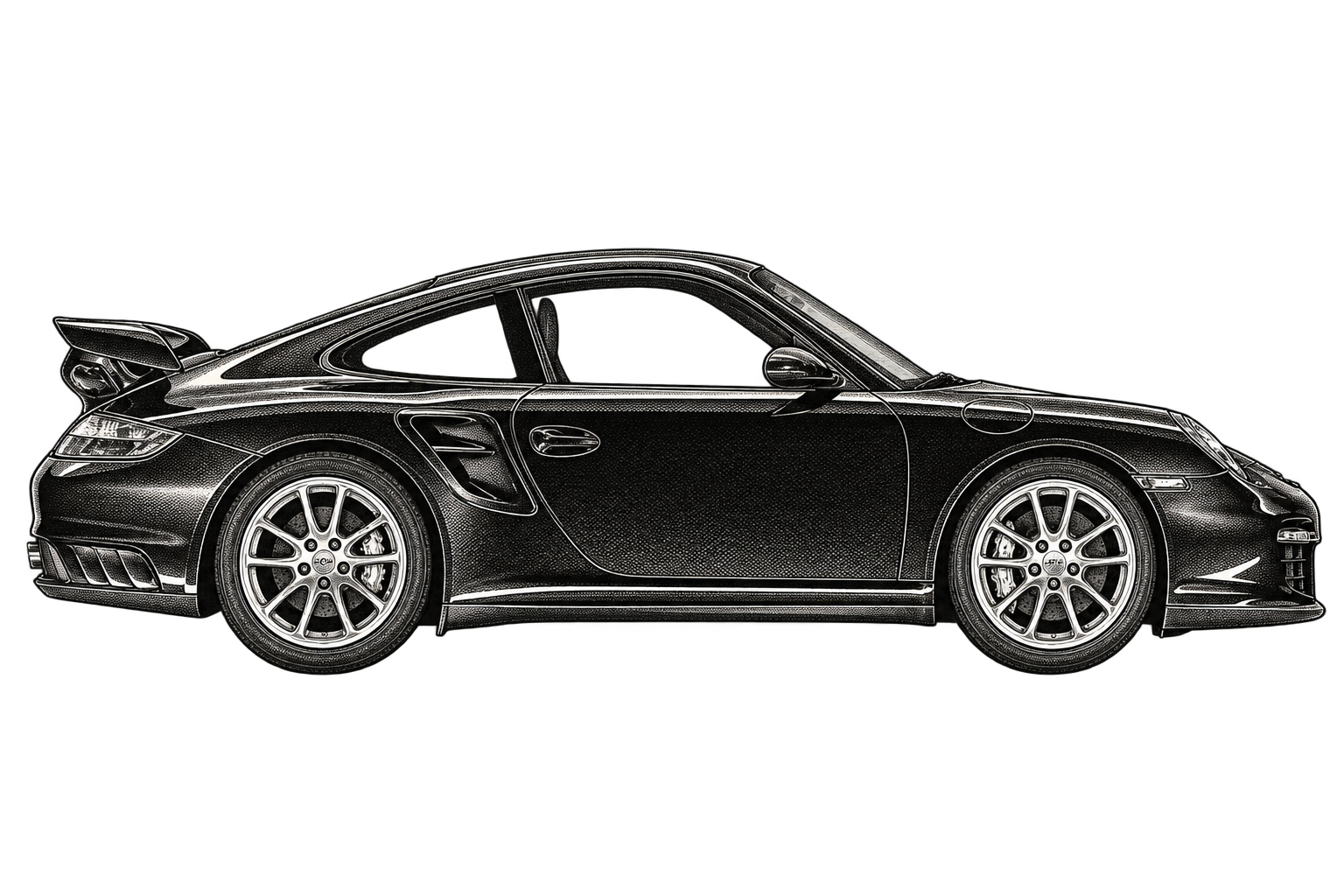
Illustration — Studio Chicane. An exterior visual study, not a technical specification or repair drawing.
02Rear drive is not a footnote
Rear drive changes the destination of all the engine and turbocharger work. It should not be converted into a road-test cliché about bravery or difficulty. The factory fact is more interesting: Porsche chose to send 390 kW and 680 Nm through the rear wheels alone. The manual gearbox is part of the same decision. A driver selects six forward ratios rather than delegating ratio changes to a dual-clutch system.
That gives the GT2 an internal logic. VTG manages a changing exhaust-flow condition; the rear axle receives the output; six manual ratios make gear selection a direct task. Those systems explain why it is misleading to reduce the GT2 to an extreme Turbo with a wing.
The generation label has appeal because it promises secret knowledge. A late GT2 with a different screen, seller’s description, or parts listing can acquire a half-generation identity by repetition. Porsche’s launch material establishes no such factory designation. It establishes a powerful, particular 911. The sensible next step for an individual car is VIN, factory equipment, and a clear record of subsequent changes. The GT2 grows more interesting when its documented specification is allowed to stand on its own: a Turbo-derived 3.6 with VTG developed for petrol-engine heat, rear drive, and six manual ratios.
Sources
Go deeper
GarageExplainer
After Mezger
Porsche's later GT3 history shows why engine-family names and inherited engineering ideas need separate explanations.
Read the explainer
IdeasNote
The Price of Participation
Compare the GT2's fixed rear-drive manual specification with the new Carrera S MT Package.
Read the note