RoadsFeature
Ford Is Going Rallying. Give Us Something Worth Homologating.
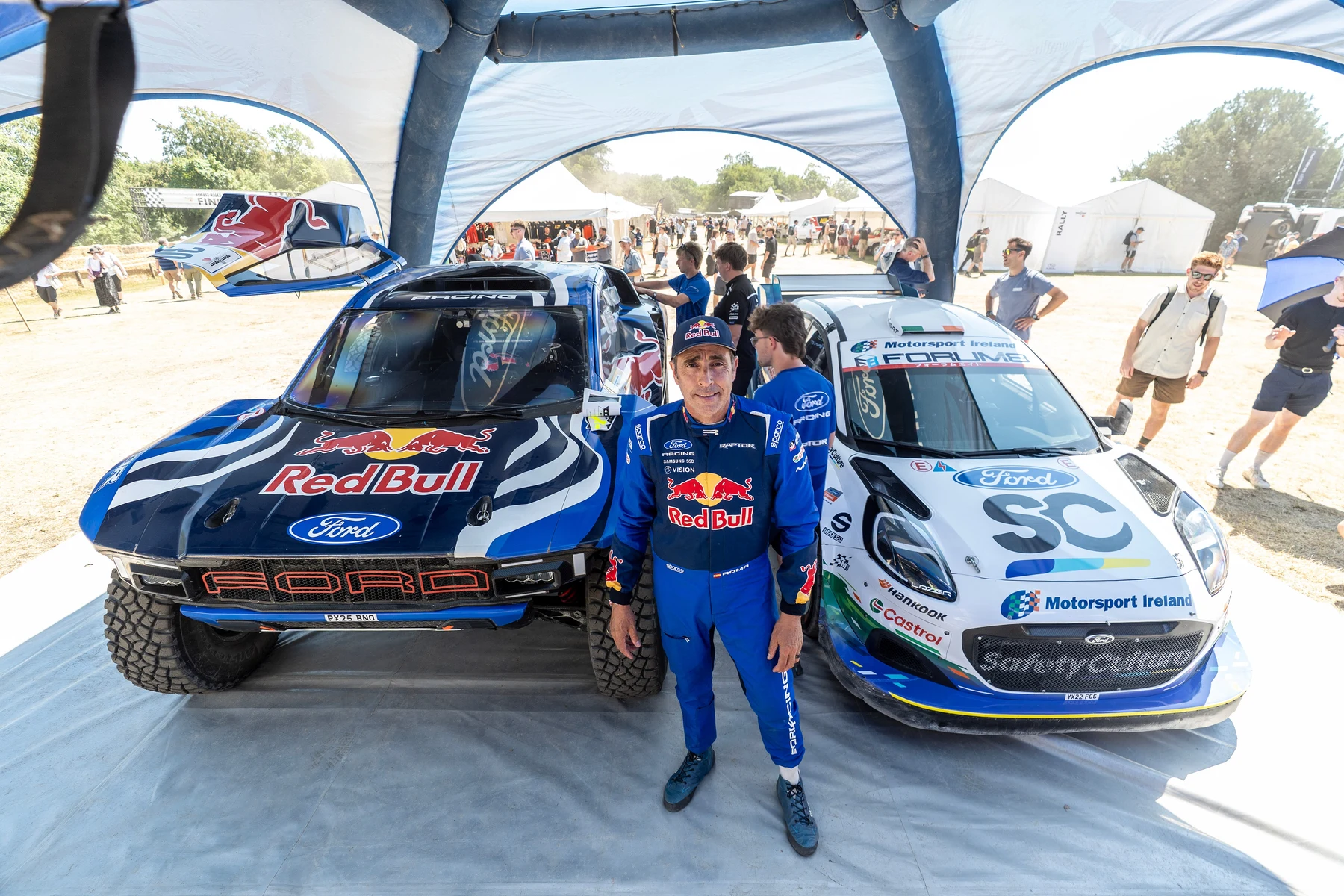
Ford returns as a factory-backed WRC entrant in 2028, with a new rally car due in 2029. The more revealing promise is that rallying should shape the road cars people actually drive.
Ford is going back to the World Rally Championship with full factory backing. Good. Now give us a road car that makes the decision feel inevitable. Ford Racing says it will return as a full factory-backed team from 2028, working with M-Sport, and that an all-new WRC race car is planned to debut in 2029. That car will take inspiration from one of Ford’s upcoming European passenger vehicles.
Ford has not named the road car, shown the rally car or announced a production homologation special. M-Sport has continued to campaign Fords in the intervening years; what is returning is the full works commitment, not the sight of a Ford on a rally stage. The useful question now is what should a modern road Ford learn from building a rally car?
The answer cannot just be a stripe package or an inflated power figure. Rallying is valuable because it forces a vehicle to work across changing surfaces, limited grip, repeated impacts, weather and long days. It makes control and durability visible. If those lessons reach a showroom car, they ought to appear in the way it responds, communicates and holds together—not only in its silhouette.
01A race car inspired by a road car
Ford’s statement links the WRC return to a new European passenger lineup of five electric and hybrid vehicles. Ford Europe president Jim Baumbick describes the championship as a proving ground for driver engagement and control on the imperfect roads its customers actually use. This is an unusually direct road-car rationale for a factory racing program. It gives the announcement something to be held to after the first livery photographs have disappeared.
The sequence is worth reading accurately. Ford will be directly involved in the WRC campaign with M-Sport from 2028, before the new race car arrives in 2029. The announcement does not specify a powertrain or identify the passenger car providing inspiration. Nor does “inspiration” establish a production car that must be homologated. The FIA’s WRC27 framework allows broad bodywork choices and different powertrain paths; that flexibility makes a relationship possible without proving that a road car and rally car will share a platform.
That ambiguity is an opening for Ford to make the relationship meaningful. In the best versions of rally-derived road cars, the connection is not a claim that the showroom vehicle is secretly a competition car. It is a translation: a practical body with stronger cooling, a chassis that stays composed over broken pavement, traction calibration that helps rather than flatters, durable components and controls that make the driver feel involved at ordinary speeds.
02Rallying has always been a two-way conversation
Sierra RS Cosworth. Escort RS Cosworth. You do not have to put either on a podium in your personal ranking to understand why the names work. They connect a familiar road-car shape to something considerably less ordinary underneath.
Ford's own history describes the Escort RS Cosworth's relationship to the Sierra's drivetrain and chassis. The smaller-looking car was not simply an ordinary Escort with a spectacular wing. That is the kind of detail that rewards looking past the photograph: the body tells one story, the engineering makes it more interesting.
And the story did not stop with the poster cars. Focus, Fiesta and Puma took the programme into different technical eras. M-Sport's Fiesta secured the 2017 manufacturers' title and the drivers' titles in 2017 and 2018. A new factory commitment should build on that continuing work, not airbrush it out in pursuit of a cleaner comeback narrative.
Homologation once made that relationship unusually literal. Under the older Group A framework, a manufacturer had to build a prescribed number of road-going versions before a related competition car could be homologated. That created famous specials, but belonged to a particular era of motorsport rules and manufacturer economics. It is not a requirement implied by Ford’s 2026 announcement, and should not be projected onto a 2029 car under a different technical framework.
The nostalgia is understandable. Rally specials gave enthusiasts a road car with a visible reason for existing: unusual drivetrain, widened body, purposeful interior, the sense that competition had left something tangible in the showroom. But the lesson is not that every works team must sell a numbered collector’s edition. Motorsport earns its cultural place when knowledge travels in both directions—and the road-going result feels like more than a marketing echo.
03What would count as a real transfer?
Ford has a chance to be specific about that transfer. A useful demonstration would connect claims about rally-derived control to hardware and calibration: how the suspension deals with sharp inputs without becoming tiring on smooth roads; how the steering communicates a change in surface; how stability systems and torque delivery help a driver find grip; how underbody protection and cooling support durability. The right answer depends on the vehicle and powertrain. An electric crossover should not be forced into the shape of a 1990s turbo hatchback to prove its enthusiasm.
The five-vehicle lineup also makes “rally-bred” harder—and more interesting—to define. With electric and hybrid cars in the announced mix, Ford cannot rely on exhaust volume or a combustion-engine origin story as the only shorthand for performance. A credible translation might mean predictable power delivery, robust thermal management, repeatable braking, careful weight control and a chassis that gives the driver a useful sense of what each axle is doing. Those are engineering goals, not guarantees, and Ford has not said which will be used.
There is a limit to what a rally car can teach a road car. A WRC machine is designed around regulations, service intervals, crews, specialist tires and roads that would be an unreasonable test for a commuter. Its suspension travel, safety cell, packaging and setup cannot simply be copied into a family vehicle. The transfer has to be selective. A road car should gain resilience and clarity without inheriting the compromises that make a competition car tiring, expensive or impractical outside its intended job.
That is why the new technical era matters. The FIA says WRC27 rules, effective from 2027, aim to contain costs and broaden participation. The framework uses a common safety-cell concept and allows bodywork drawn from a wide range of production shapes, with powertrain options including sustainably fuelled combustion, hybrid or fully electric systems. It is a more flexible relationship between race-car structure and road-car appearance than the old image of a showroom special as the necessary starting point. Ford’s announcement arrives inside that shift.
The owner's side of this is familiar from our KW Porsche story: capability matters when it changes what you can enjoy doing with a car. The useful question is not whether it looks adventurous in the driveway.
04Let the road car make the case
There is no need to ask Ford to resurrect a particular name before it has shown the rally car. Build a competition program with enough engineering substance to deserve attention, then show what it taught the vehicles customers can buy. If one merits a focused performance version, make the case through the changes themselves: chassis, cooling, braking, drivetrain, durability and a clearly defined purpose.
Ford’s history supplies evocative names, but the future lineup will be judged on its own terms, especially if its powertrains depart from the familiar template. It does not have to resemble a Group A special. It does have to feel as if the people who understand rough roads had a hand in it.
Ford says rallying can help create responsive, confidence-inspiring and rewarding passenger vehicles. That is a good brief, measurable in a way nostalgia is not. The 2028 entry and 2029 race car are milestones. The proof will arrive in the road cars afterward: whether they make imperfect pavement feel like part of the drive, whether their performance survives repeated use, and whether their engineering tells a clearer story than their badges.
Give us something worth homologating, then. Not because a rulebook demands a special edition or the past can be summoned with a decal. Give us a road car whose engineering makes the WRC connection feel earned.
Sources
- Ford Racing, Ford Returns to FIA World Rally Championship, October 1, 2026
- FIA, WRC27 Technical Regulations confirm a dynamic, flexible future
- FIA, WRC27 Rally1 concept and next-generation rally machinery
- FIA, 2026 World Rally Championship and current manufacturer context
- Ford — Stage Presence: Nine Cars That Define Ford's Rally Heritage
Go deeper
GarageExplainer
The American Argument
A road-car story about the engineering and cultural weight attached to a performance badge.
Read the explainer
IdeasFeature
More Sky, Not More Power
Another case where the meaning of a new performance car depends on how its ideas reach ordinary driving.
Read the feature
ObjectsFeature
The Occasion
A different argument for why the cars built around a marque’s identity need more than a specification sheet.
Read the feature