IdeasFeature
Let the Calendar Move Again
Leno’s Law offers limited relief. California still needs a rolling age exemption—and regulators who answer for the automotive trade-offs they make.
For more than two decades, California’s smog-exemption line made a peculiar pair of near-neighbours into different legal categories. A 1975 car stood outside the program. A 1976 car did not. The difference could be one turn of a calendar, a similar mechanical layout, and a remarkably different ownership burden.
SB 1392, now Chapter 245 and known as Jay Leno’s Law, moves that line. That is real progress for some owners. It is not the return of the rolling 30-year exemption California once had, and it is not liberation.
The distinction matters because the argument around old cars has too often been forced into a false choice. Either the state treats every older car as an environmental offence waiting to happen, or the enthusiast world pretends that age, rarity and a pleasing paint colour settle every question about emissions. Neither position is serious enough for a state that has both an extraordinary automotive culture and real air-quality obligations.
The new law makes a limited correction to a cutoff that had become hard to defend as a universal proxy for use. It offers conditional relief to a defined collector category rather than a general pass for old cars. That is not nothing. A 1976 owner who has maintained a car for events, occasional outings and the pleasure of keeping an old machine alive has a better prospect than they did last month.
But the way the law is being celebrated risks making its limits disappear. The timetable begins later, proceeds in stages, and stops before the E36 and the wider 1990s argument. A car at the far end of its range still has years to wait. Calling the bill a restored rolling exemption would therefore be more than exuberant language; it would erase the very boundary it leaves in place.
That boundary is political as much as mechanical. The 2019 Assembly Transportation Committee’s history of AB 210 records that SB 42 created a 30-year rolling exemption in 1997, scheduled to begin in 2003. In 2004, AB 2683 repealed that mechanism amid concerns about older-car emissions and California’s federal air-quality commitments, leaving the pre-1976 rule. The state made a decision to stop the calendar. This month’s law starts it moving again only a short distance, and on a different set of conditions.
There is no need to make a villain of the clean-air case to say that the state should do better. A badly maintained old car can pollute heavily; a classic-car registration is not a certificate of virtue. Nor should the people who live near the most polluted roads be asked to accept a hobby’s self-description in place of evidence. But a smog policy that treats infrequent preservation use exactly like daily transportation is also a blunt instrument. It puts a collector-maintained 1976 car and a high-use neglected one inside the same box because both have a model year stamped on the title.
The wiser question is not whether every enthusiast deserves a waiver. It is whether the state can identify, verify and supervise limited-use preservation vehicles without making their owners repeat a system built around a different kind of car. The Legislature’s condition bundle is its answer to the fear that any movement of the cutoff is a back door to unlimited daily operation.
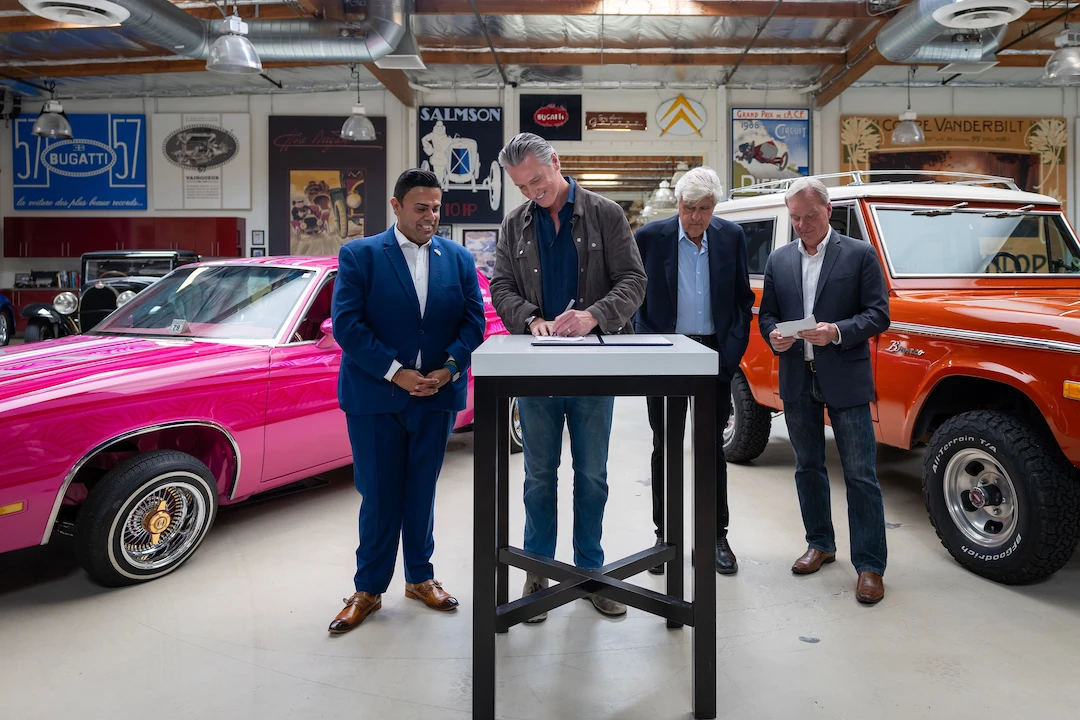
The test is whether that distinction works in the real world, not whether it reads well in a signing photo. A rule an owner cannot understand, an insurer cannot document, or a counter clerk cannot apply will turn restraint into another lottery. A rule that is clear and proportionate can do something rarer: ask owners to meet a standard without treating their cars as contraband by date alone. That is the measure against which the implementation should be judged.
That bargain may be administratively useful. It should not become a reason for enthusiasts to congratulate themselves into silence. It restores no annual graduation and creates no general exemption for altered emissions equipment. Proof, mileage, transfers and enforcement depend on implementation. And it stops before a great many cars that are now old enough to be historical objects in every ordinary sense of the phrase.
01A rolling exemption, not another frozen line
Studio Chicane should be explicit about what comes next: a rolling age exemption. Cars should be able to reach a defined age and qualify under clear, published conditions, rather than depend on a new celebrity campaign every time another generation gets old. This is the policy we are advocating, not what the new law currently provides. The precise age and safeguards need their own argument; the principle should not be buried in a victory lap.
Accountability has to run in both directions. Owners should meet the applicable conditions. The people setting those conditions should have to defend them with relevant evidence, explain their assumptions in public and answer for the results. A regulator’s title is not a substitute for expertise in the thing being regulated.
02The tire argument belongs here, too
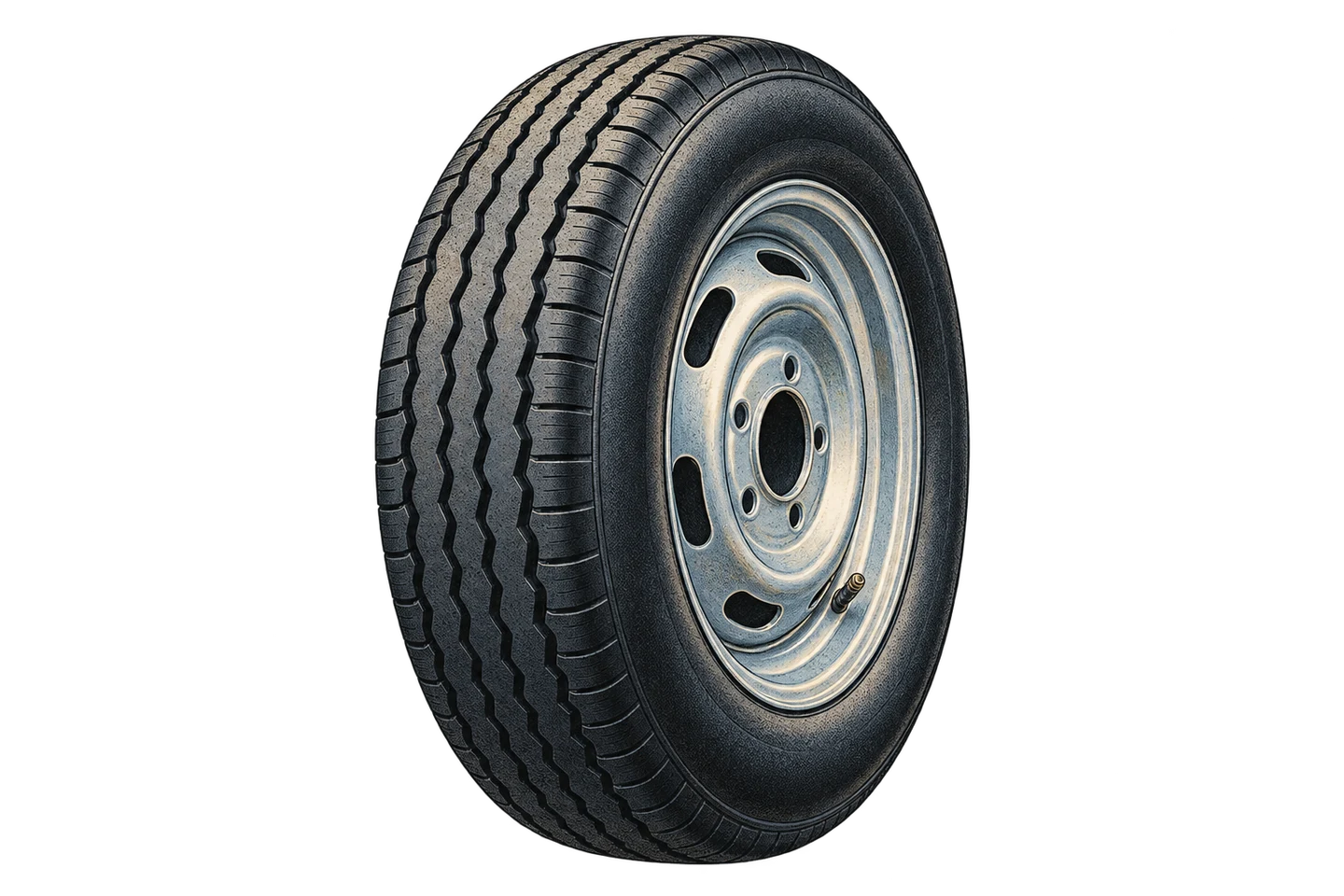
Consider California’s replacement-tire efficiency program. This is a California Energy Commission rulemaking, not a CARB decision or a court judgment. The CEC announced its approval on 17 August 2026; its published schedule starts the two phases in 2029 and 2033. The proceeding page also lists specialty exclusions. A claim that every enthusiast tire has just become illegal would be wrong.
The CEC says its testing supports efficiency gains without sacrificing safety or tire life. That is a substantial promise. I want the evidence behind it open to scrutiny, and someone answerable if the real-world results do not match.
What I want is automotive expertise with visible responsibility. Who has demonstrated the relevant tire-testing competence? How representative are the tested sizes and applications? How do the results hold up as tires wear? What happens to actual prices and availability, and who must respond if the promised outcome does not arrive? Published laboratory reports are a starting point for those questions, not an exemption from them.
The commission is appointed by the governor and confirmed by the Senate. An appointment is not an automotive qualification. If you are going to set the rules for what people can put on their cars, show the relevant expertise, defend the trade-offs and take responsibility for the outcome. A broad policy résumé should not end that conversation.
The people keeping these cars alive—in workshops, on driveways and in the conversations at Cars & Coffee—deserve a serious hearing. We are not just an inconvenient category in somebody else's policy model. Practical knowledge should count, and disagreement should get an answer, not a dismissal.
That is the standard I want applied to both issues. Let the exemption age roll forward under understandable rules. Make decision-makers explain the evidence, answer serious objections and revisit outcomes—not simply announce that the public has misunderstood them. Keeping a car should not mean choosing between blind trust in a bureaucracy and blind trust in a forum.
There is a broader cultural point beneath the paperwork. Cars survive through use: fluids circulating, brakes exercised, a drive to a show, a careful owner finding the fault before it becomes the kind that strands a vehicle for a decade. Preservation is not always a dust cover. California should be capable of seeing the difference between that living history and a loophole. The state has taken one small step toward it. The line still needs to move.
For a companion argument about treating a car as the specific thing it is—not a shorthand for an entire market—see The American Argument. For the longer ownership question, see Keeping It Properly.
03What the law actually changes
SB 1392 was chaptered on 16 September 2026. Qualifying collector cars start at pre-1981 on 1 January 2028; the line advances one model year each year, reaching pre-1986 in 2033. The statute requires age 35 model years, preservation/event use rather than primary transport, and its collector-insurance or low-mileage provisions. Regulations set the insurance route from 2028; the fewer-than-1,000-miles route begins on 1 January 2030. Qualifying transfers receive equivalent treatment. No general modification or anti-tampering exemption is created.
Primary source: California Legislative Information — SB 1392, Chapter 245.
Sources
Go deeper
ObjectsExplainer
The Tire Is Part of the Restoration
Why tire decisions deserve more than a single headline metric.
Read the explainer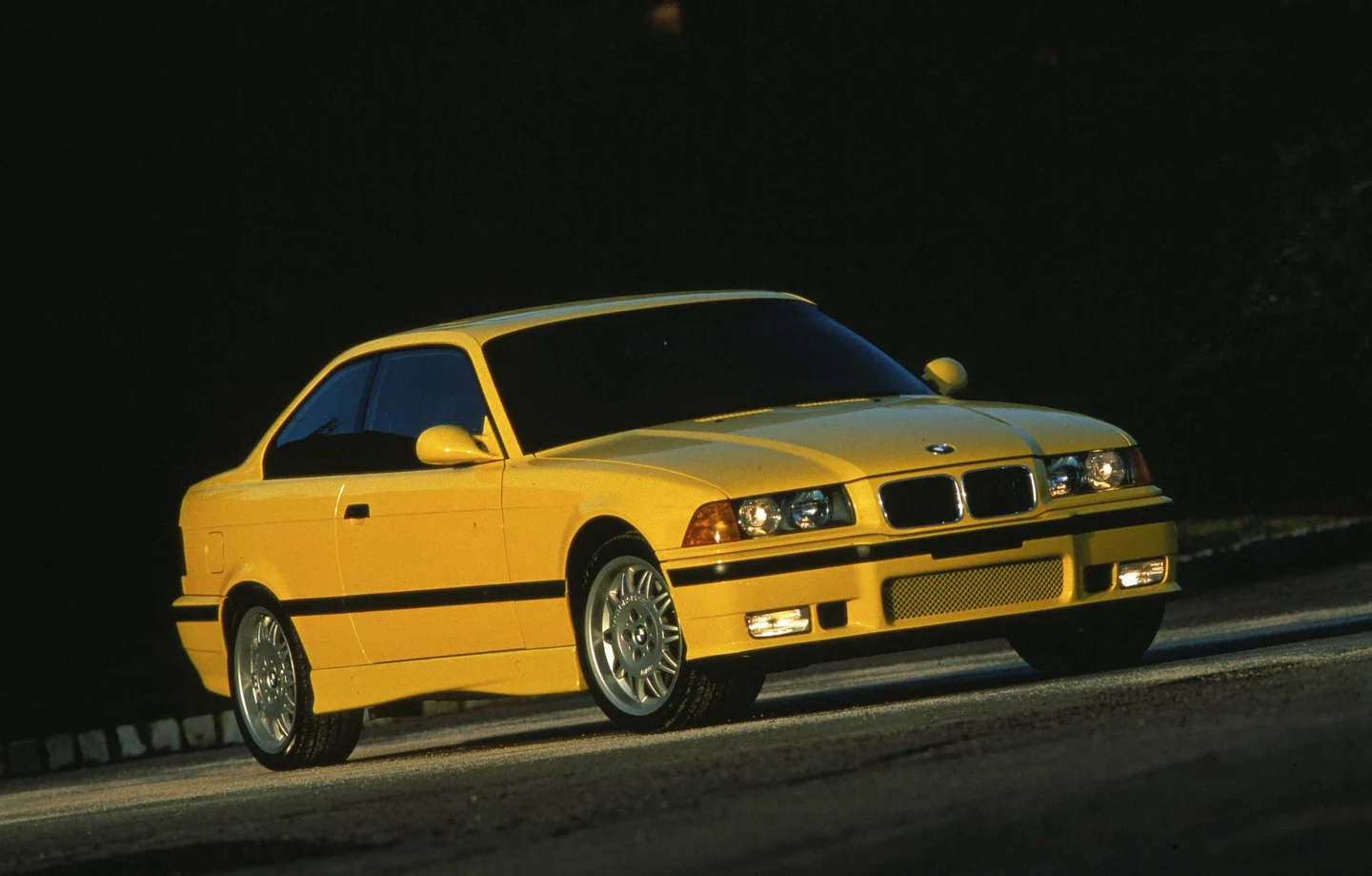
GarageExplainer
The American Argument
A generation of cars still waiting beyond California’s new boundary.
Read the explainer
GarageFeature
The Car Outlasts the Service Plan
The owner’s side of the bargain: looking after a car for the long term.
Read the feature