ObjectsExplainer25 September 2026
The Tire Is Part of the Restoration
A period-looking tire and a tire approved for a particular car are not interchangeable ideas. Porsche’s 2016 classic-tire programme shows how much work sits between an attractive sidewall and a manufacturer’s model-specific approval.
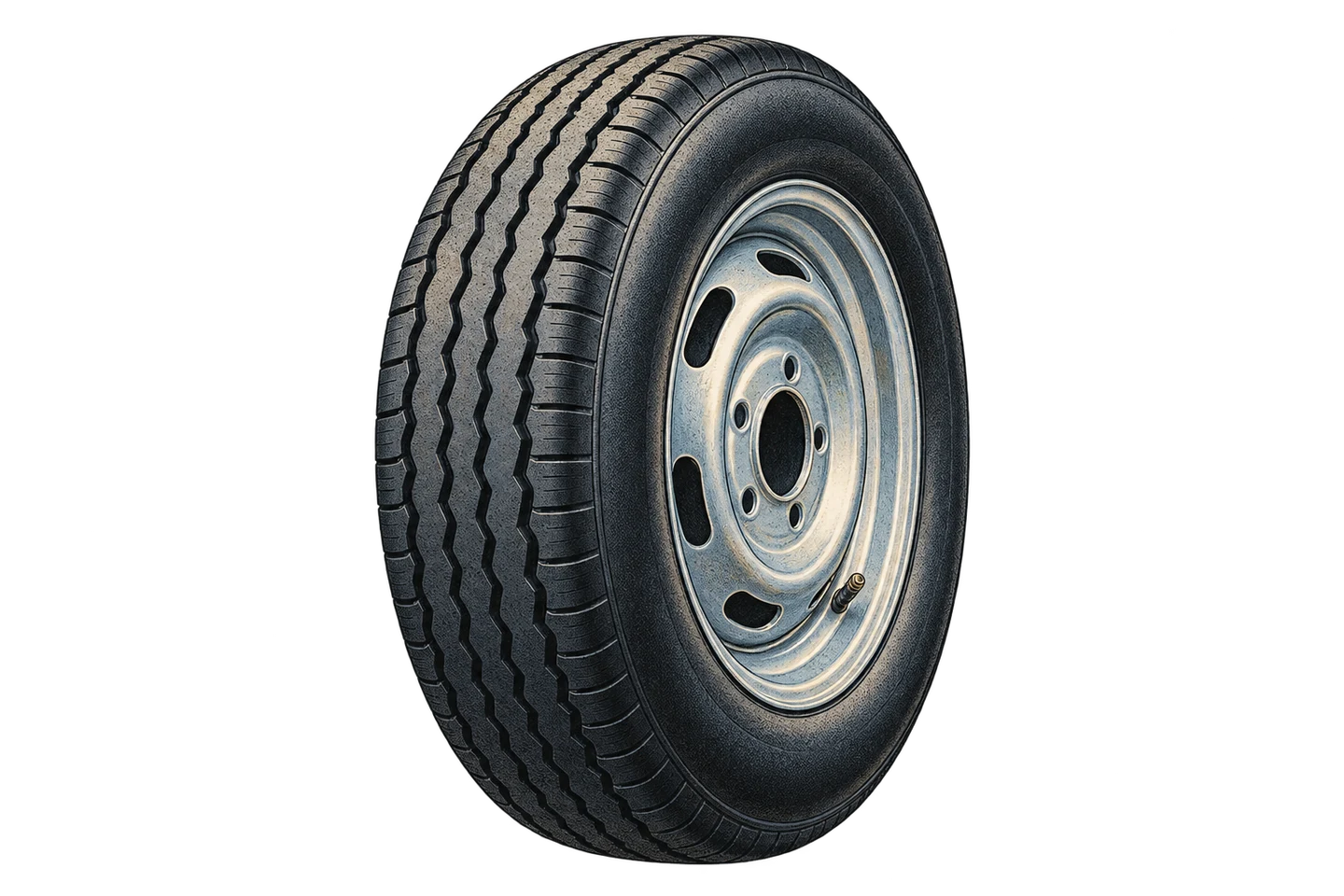
01The part that meets the road
A tire can make a restoration look finished before it is mechanically finished. A period sidewall has persuasive power: the typography, shoulder shape, and tread can return a car to the visual tense in which it first appeared. But that is only the visible part of the job. The tire is the component through which braking, steering, ride, and traction reach the road. Calling one “right” for a historic car therefore ought to mean more than calling it photogenic.
Porsche and Pirelli gave a useful historical account of what that word can require in a 2016 classic-tire programme. Porsche described roughly 200 new model-specific approvals covering 16 Porsche models from the 356 to the 991. The scale matters less as a number to admire than as a reminder that a designation has to be earned repeatedly: different cars, different applications, and a process the maker says was model-specific.
02Approval is a process, not an aesthetic
Porsche described 33 criteria in its approval work. The list ranged across production precision and concentricity, speed profile and braking, hydroplaning resistance, handling, steering factors, and directional stability. It is an unusually helpful list because it prevents the conversation from becoming a single-issue argument. A tire can look period-correct and still leave unanswered questions about manufacture, wet behaviour, steering response, or stability.
The exact weighting of those criteria is not supplied by the account, and this article cannot turn a historical manufacturer description into advice for a particular car. But the categories explain why tire approval is more demanding than a size match. The test is making a claim about a moving car, not merely a wheel arch.
Wet performance is especially clarifying. A tread design might communicate a period convincingly, yet Porsche includes hydroplaning resistance and wet-surface disciplines in the programme it describes. That does not mean every contemporary construction produces the same result, nor that an old appearance is automatically unsafe or safe. It means the visual question was only one question among many.
03Old profile, newer construction
Porsche says Pirelli combined classic tire profiles with modern rubber mixtures and modern casing structures. That small sentence describes the real compromise in a restoration-oriented tire programme. The profile preserves part of a car’s visual and dimensional relationship to the road. The materials and construction acknowledge that a historic car can be kept in use without treating every old limitation as sacred.
Authenticity is sometimes discussed as if it demanded a single answer: either preserve the exact past or surrender it to the present. The programme suggests a more precise way to think. A tire can be historically legible in profile and pattern while being a contemporary engineered object in compound and carcass. Whether that is the preferred answer for a given car is a question for its documented approved applications and appropriate professional assessment, not a universal rule.
Michelin’s Classic range states a related premise in its own language, pairing period-correct sidewall and tread patterns with modern technology. The two makers are not interchangeable authorities and their ranges should not be treated as one shared approval catalogue. The useful common point is narrower: both recognise that appearance and construction are separate design decisions, and that period appearance need not require old materials.
04What the N marking says—and does not
Porsche uses the N marking to identify a tire approved by Porsche. That makes the marking meaningful evidence of a manufacturer test programme, but it does not turn it into a universal ranking of all tires that might physically fit a wheel. It cannot establish present stock, price, condition, suitability for an altered car, or a recommendation for a reader’s particular use. Those are separate questions.
“Factory approved” sounds definitive because it compresses a process into two words. The useful reading expands it again: approved for which model, under what stated criteria, and with which scope? A sidewall marking may be the end of that chain, but it is not the whole chain.
05Restoration as mechanical editing
The point is not that every restoration must pursue one authorised tire or that visual correctness is trivial. It is that a tire edits the car’s mechanical language at the same time that it edits the photograph. Change its profile, compound, carcass, or approved application and the change may be invisible to a casual viewer while still being consequential to the way the manufacturer understood the car’s behaviour.
The better restoration question is therefore not simply whether a tire looks right. It is what, exactly, was tested before someone said it belonged. Porsche’s 2016 account offers a disciplined answer: precision, braking, water, handling, steering, stability, and a model-specific approval process. That is enough to put the tire back where it belongs—not as a decorative final detail, but as part of the restoration itself.
Sources
Go deeper
ObjectsExplainer
After ‘No Longer Available’
Both a replacement component and a period-looking tire need more than a convincing shape.
Read the explainer
IdeasNote
Keep the Radio. Fix the Listening.
Another way to combine older visual design with contemporary technology.
Read the note