IdeasFeature
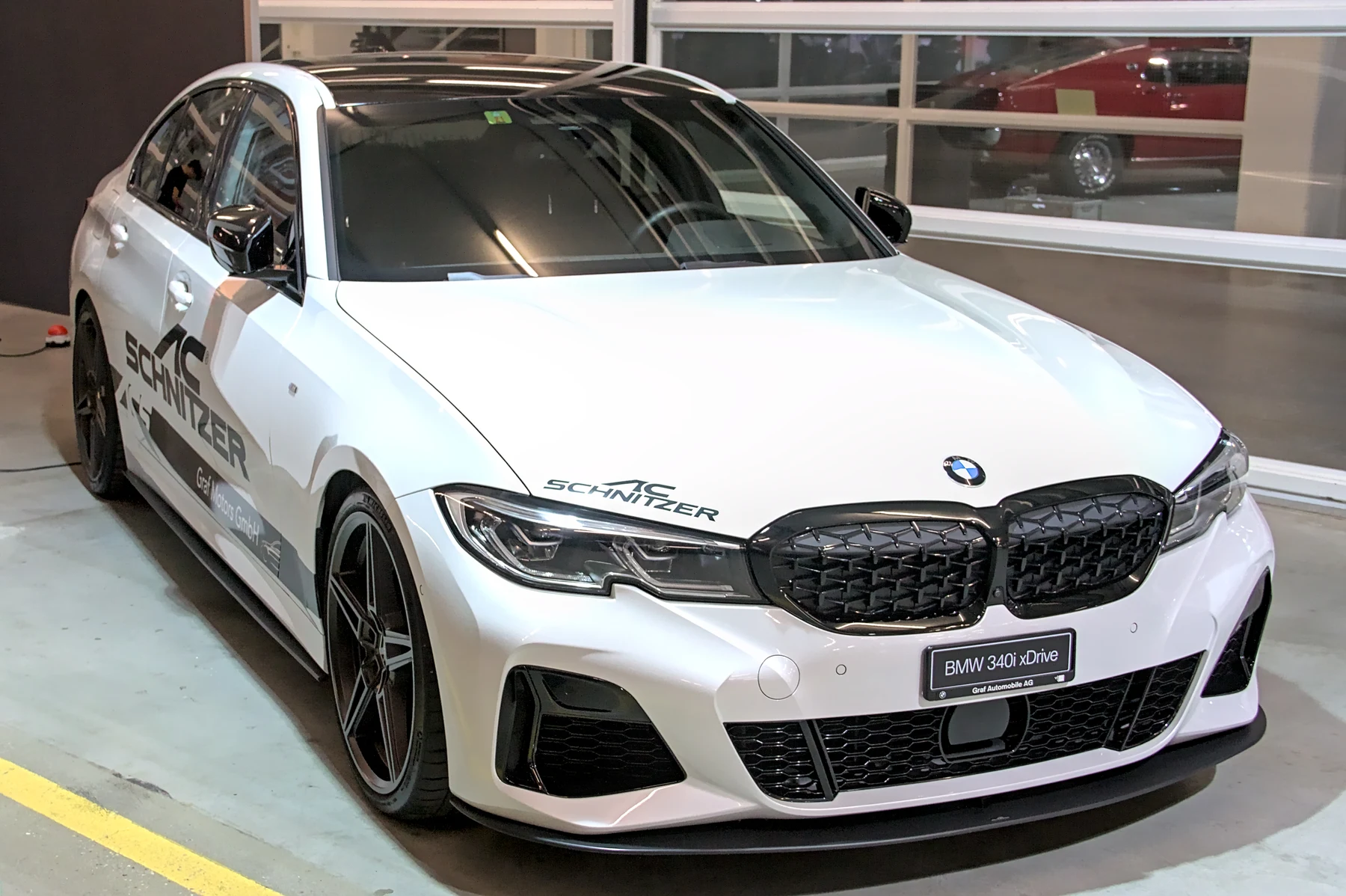
AC Schnitzer Survives. Now Save What Made It Matter.
AM Group’s acquisition keeps the Aachen name alive. The harder task is carrying forward the engineering judgment that made its BMWs more than a catalogue of accessories.
You could recognise a proper tuner car before you could read the badge. It is not simply louder, lower or more decorated than the car beneath it. The changes appear to belong together. The wheel, stance, steering response, engine and bodywork seem to have been considered as parts of one answer to the question: what could this car be, if someone were willing to finish the thought?
That is the standard AC Schnitzer now has to protect. On September 29, KOHL Group announced that it would transfer the Aachen tuning business to Dutch AM Group effective November 1, 2026. The official announcement says the brand will continue, entering a new phase with investment in development, design and international growth. That is welcome news. Survival, though, is a corporate event. Continuity is a product decision, repeated for years.
In March, KOHL had announced its withdrawal from the tuning-parts business at the end of 2026, with stock to be sold through and warranties and after-sales support continuing beyond that date. Its explanation included rising development and production costs and slow approval procedures. It was already seeking a buyer. This week's transfer announcement is the answer to that uncertainty, not evidence that an already-closed factory has reopened.
AC Schnitzer’s value was never just that it sold parts for BMWs. There are many ways to make an existing car look more expensive or more conspicuous. The more difficult work is changing the car without breaking the logic that made its original engineering compelling: keeping it usable, integrating each modification with the rest, and being willing to test the result.
01The difference between a parts list and a point of view
AC Schnitzer dates its automotive operation to 1987 and describes product development as its core. Its public range tells a familiar tuner story—suspension, wheels, exhausts, engine upgrades and aerodynamic components—but the categories alone do not explain the appeal. The company’s own account of its aerodynamic development, for example, describes wind-tunnel work, calculations, further testing and pedestrian-protection checks before parts are certified and offered. That process is more consequential than a styled edge on a bumper. It treats appearance as something that has to survive contact with air, regulation and use.
That discipline is what makes a coherent package different from an accessories catalogue. A large wheel affects more than the photograph: it changes the tire sidewall and unsprung mass. A lower ride height can alter geometry and travel. Added power asks something of cooling, traction and the driver’s ability to use it. A spoiler has to do more than look convincing from behind. The point is not that every road-car modification needs motorsport complexity, or that every owner wants a track setup. It is that the choices should acknowledge one another.
The tuner’s strongest work has often taken that idea to an unusually complete conclusion. AC Schnitzer’s own archive records the 2016 ACL2, based on the BMW M235i, with a 570-horsepower engine specification, M4-derived axles and a height-adjustable Clubsport suspension with compression and rebound adjustment. That is not an argument that every customer needs an extreme one-off. It is evidence of a house willing to ask what happens when the component list becomes a vehicle concept—and to show its work in enough detail that the answer can be discussed technically.
For anyone formed by Eurotuner, imported magazines and long evenings on the forums, this is familiar territory. The photograph made you stop; the list of changes made you stay. A wheel was not just a diameter. It had a shape, a relationship to the arch, a reason to belong on that car. You could disagree with a build and still enjoy understanding what its owner or maker was trying to do.
That is the culture I want this news to preserve. Not an obligation to approve every Schnitzer bumper. The possibility of a distinct interpretation of a BMW, worked through far enough to argue about. Our KW story begins with the same freedom: factory specification is a starting point, not the only permitted conclusion.
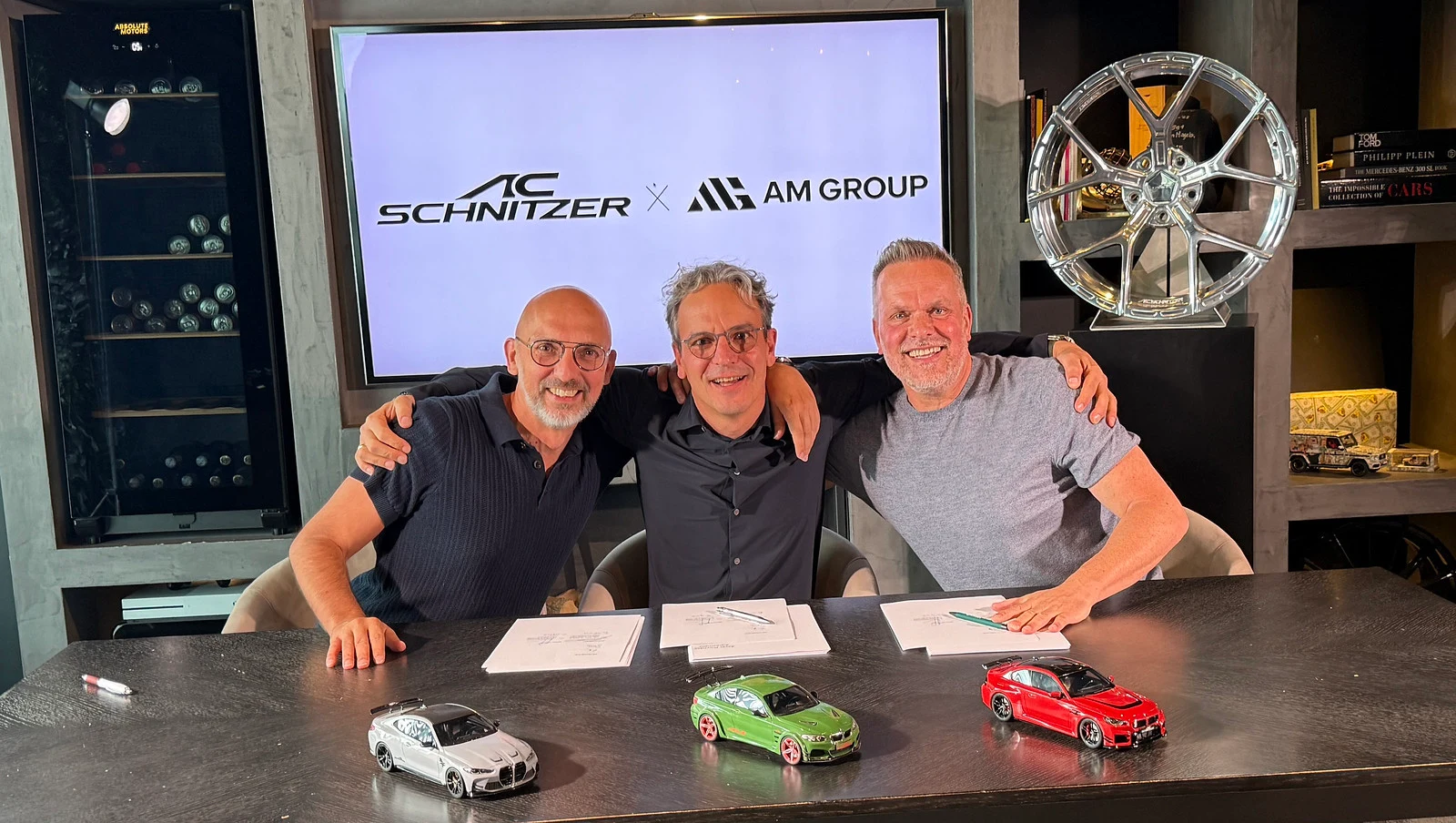
The AC Schnitzer–AM Group transfer announcement. Official press photograph: AC Schnitzer.
02A change of owner is not yet a new chapter
AM Group brings a portfolio and capabilities in automotive design, performance engineering, parts distribution and carbon-fibre manufacturing. Those resources could give a specialist marque room to develop products and reach customers beyond its previous scale. They do not automatically preserve a way of making decisions. The transfer’s most meaningful details will be the less photogenic ones: who develops the products, what testing remains part of the process, how complete vehicles are conceived, and whether the engineering documents and dealer relationships remain useful rather than simply archived.
The announcement describes a new German company that will carry the operations, along with existing technical documentation and TÜV certification files. Those files matter. They can preserve the accumulated evidence behind products that have already been tested and approved. But a file cabinet cannot decide whether a future wheel suits a chassis, whether a spring rate is a compromise worth making or whether a performance claim is supported by a finished car. The people and standards behind the paperwork matter just as much.
That is why the announcement’s language about identity should be treated as a commitment to demonstrate, not a conclusion already reached. A brand can keep its name, colors and product categories while losing its point of view. It can also change hands and become more capable, if the new owner protects the judgment that customers came for and gives it the means to keep working.
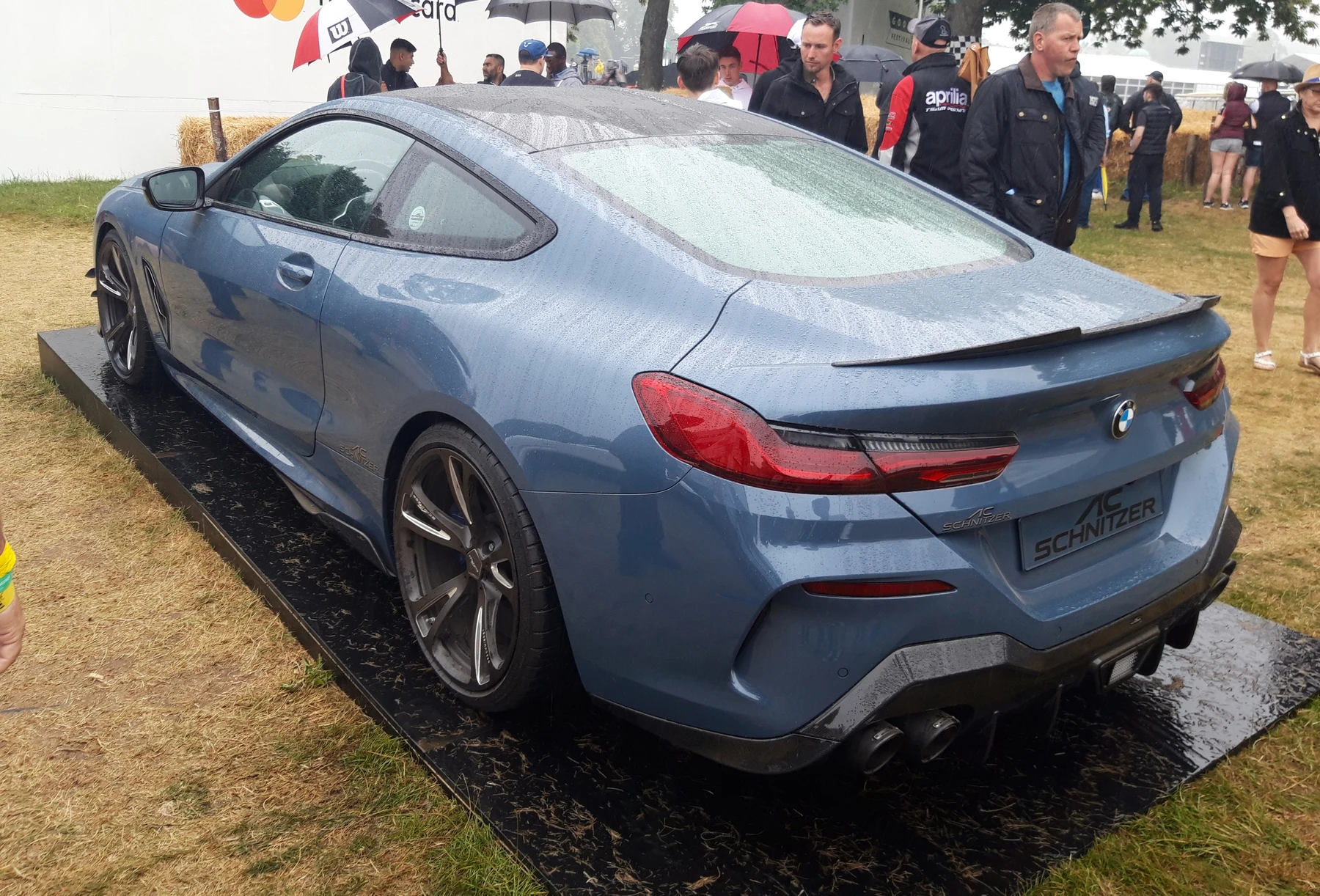
AC Schnitzer's ACS8 at the 2019 Goodwood Festival of Speed. Photograph: MrWalkr, CC BY-SA 4.0; resized and encoded to WebP. Source and licence linked below.
03The future should be visible in the finished car
The useful test is not whether AC Schnitzer can put a part on every current BMW. It is whether a customer can still recognize a considered answer when the full package is assembled. Does the suspension make sense with the wheel and tire? Has the power upgrade been calibrated around how the car is driven, rather than a headline number? Does the aerodynamic work have an intelligible purpose? Does the finished car remain something its owner can use beyond a reveal event?
Those are not demands for conservatism. AC Schnitzer’s history includes conspicuous, ambitious concepts; coherence is not the same as restraint. The test is whether a bold choice belongs to the car and has been developed far enough to make the result more interesting as a machine, not merely more dramatic as an image.
This also gives the next generation of parts a fairer measure than novelty. Carbon fibre is a material, not a philosophy. More markets are an opportunity, not a substitute for product development. A wider dealer network can make ownership easier, but it cannot tell us whether the new products feel authored. The answer will be found in the cars and in the records behind them: the measurements, the testing, the fitment, the calibration, the instructions and the support after sale.
It would be easy to treat the acquisition as a rescue story with a tidy ending. The better reading is that the clock has restarted. The November transfer gives AC Schnitzer a chance to continue into its fortieth year in 2027. It also puts a clear question to the incoming owner: what, precisely, is worth carrying forward?
The answer cannot be the logo alone. It is the practice of treating the modified BMW as a complete car—one whose engineering, visual character and ordinary usability have to make sense together. Keep that practice alive and the next AC Schnitzer will have a reason to exist. Lose it, and the name survives only as lettering on a box.
04Image credits
AC Schnitzer BMW 340i xDrive at Auto Zürich 2021: Alexander Migl. ACS8 at Goodwood 2019: MrWalkr. Both photographs are licensed under Creative Commons Attribution-ShareAlike 4.0. Studio Chicane resized and encoded them to WebP; these derivatives remain under the same licence. The separate transfer-announcement photograph is © AC Schnitzer, used under its editorial press permission.
Sources
- AC Schnitzer, official acquisition announcement
- AC Schnitzer, company history and chronicle
- AC Schnitzer, aerodynamic development and testing
- AC Schnitzer ACL2 technical specification
- Reifenpresse, AC Schnitzer transfer announcement coverage, September 29, 2026
- AC Schnitzer — March 2026 announcement of KOHL's planned exit from tuning-parts production
Go deeper
GarageExplainer
The American Argument
A close look at the difference between modifying a BMW and understanding what makes it work.
Read the explainer
GarageFeature
The Parts Promise
Engineering continuity depends on more than a marque name; it depends on technical knowledge surviving the handoff.
Read the feature


GarageFeature
Build the Porsche You’ll Actually Use
A related argument for modifications that improve a car as a whole, rather than decorate it one part at a time.
Read the feature