GarageFeature
The Car Outlasts the Service Plan
My first BMW’s automatic lasted. We changed its fluid. A new xDrive lawsuit asks a narrower question about what another generation of owners was told to maintain.
My first car was an automatic 1995 BMW 318i sedan, Boston Green with tan leatherette. I absolutely loved it. What a great first car.
The transmission lasted a long time. We changed the fluid, and I give that care credit. We did not buy the bullshit that “lifetime” meant leaving it alone forever. I wanted to keep the car; that was the horizon that mattered to me.
An ordinary four-cylinder BMW with an automatic does not need a rarity argument to matter to somebody. That is worth remembering when a maintenance story gets reduced to a repair bill or a clever joke about the owner. The car on the invoice can be somebody’s favourite thing.
The useful detail in the new BMW differential-fluid lawsuit is not a slogan. It is the front axle. On an xDrive G05 X5, G06 X6 or G07 X7, the front differential is a separate geared assembly: ring and pinion, bearings, seals and oil, receiving drive from the transfer case as the vehicle sends torque to both axles. It has its own thermal life, its own load history, and—crucially for this story—its own maintenance language.
On September 21, Jalopnik reported on Heckler v. BMW of North America, LLC, a proposed class action filed in federal court on August 31. The complaint concerns certain xDrive G05, G06 and G07 vehicles through model year 2025, with a proposed class limited to Pennsylvania residents or people who bought or leased there. Its claims are allegations, not findings: it alleges that BMW represented the front-differential oil as not requiring replacement, despite knowing that the units needed periodic fluid replacement to avoid premature failure. The case is at its start, and it says nothing yet about every BMW, every differential, or the eventual outcome.
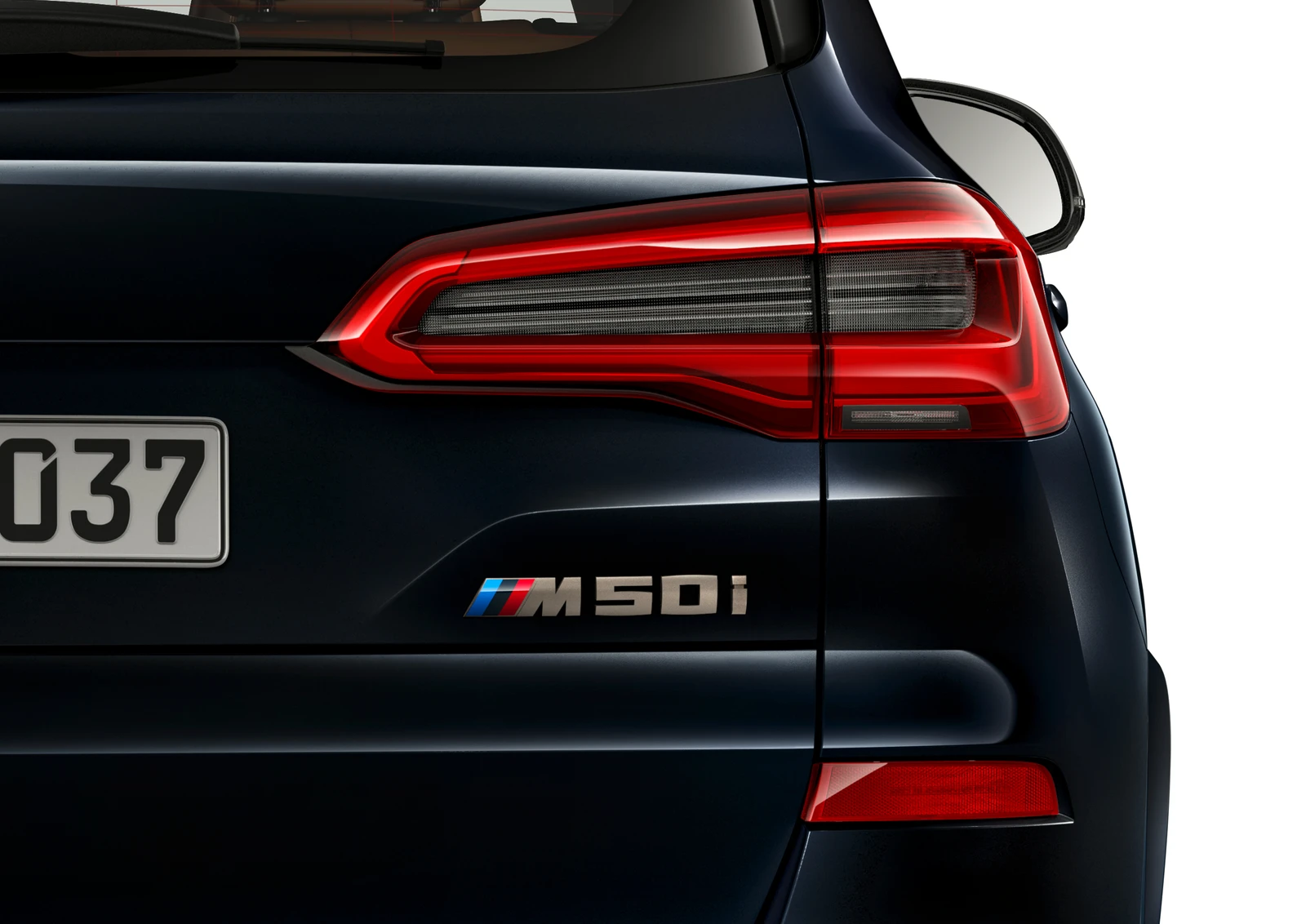
The plaintiff’s particular car is a 2020 X5 M50i xDrive. The complaint says a noise at roughly 47,000 miles led to a diagnosis of internal front-differential damage; it says a dealer documented metal shavings and that the plaintiff paid $6,199.01 for replacement after a warranty denial based on time in service. Those particulars need to remain where they belong: in the complaint, to be answered and tested. They are nevertheless a useful map of what an owner and technician would want to know—what was heard, what was found, what oil was present, and which component actually failed.
That specificity is a welcome corrective to the usual fluid debate. A differential does not care whether the service menu calls its fill “lifetime.” It works the oil through a meshing gear set and bearings, heats it, carries away wear material, and relies on the lubricant’s additive package and viscosity to remain appropriate under load. None of that proves that changing fluid at any particular mileage would have prevented the alleged failure. It does explain why “sealed” is not the same as “mechanically uneventful,” and why a diagnosis has to begin with the exact assembly rather than a broad category called drivetrain.
The complaint makes much of access: it alleges that the affected front differentials have drain and fill provisions that sit behind undertrays, bracing or other removed parts. That is not evidence by itself that BMW prescribed a service interval; production hardware can serve assembly, repair, inspection or fluid-replacement purposes. But it is the kind of physical detail that turns an argument about marketing language into a question a careful technician can inspect. Where is the fill point? What does the factory procedure say? What fluid specification, quantity, temperature condition and tightening requirement apply? A credible answer needs all of those, not a bottle and a confident forum post.
BMW’s current U.S. maintenance material is a reminder that drivetrain service is model-specific. Its 2026 all-model booklet lists “Front differential and/or Final drive oil” as a combined-with-engine-oil task for applicable M vehicles, and its model matrix contains other specific drivetrain-fluid operations. It also directs owners to the vehicle’s maintenance system and applicable summary for the work that applies. That independent document neither proves the complaint nor creates an interval for an earlier X5 M50i. It does show that a single brand-wide rule is the wrong lens.
The distinctions are not pedantry. A rear final drive, an xDrive front differential, a transfer case, a torque-converter automatic and a manual gearbox are separate systems with different fluid requirements, capacities and service instructions. A 2020 M Performance X5 is not automatically interchangeable with an X5 M, an X7 M50i, or a later car whose maintenance system asks for a different operation. Model year, market, drivetrain code, component revision, use and documented prior work have to stay attached to the question.
This is why the current case is more interesting than a quick “lifetime is a lie” headline. It asks whether a manufacturer’s maintenance representation and the service needs of a particular component were aligned. That is a proper question for evidence: BMW’s underlying documents, field data, technical procedures, expert analysis, the defence and eventually the court. The lawsuit does not license an enthusiast to declare causation for a noise on their own car, nor does it support a made-up universal fluid interval. This essay supplies neither.
There is still an ownership question here, but it is an editorial question rather than a claim about BMW’s intent. What happens when a vehicle is kept far beyond the period contemplated by its original maintenance plan? The long-horizon owner starts reading service records as carefully as option lists. That is the instinct behind The Parts Promise: preserving an interesting car means caring about the quiet systems as much as the visible ones.
The practical discipline is unglamorous and valuable. Keep invoices with mileage and dates. Preserve the exact diagnosis, not just “diff replaced.” Record the part number, fluid listed, symptoms and any relevant BMW bulletin or dealer recommendation. When a car changes hands, ask what was performed and what was merely discussed. If a problem appears, diagnose it before assigning a cause; metal in a housing, a front-end noise and a neglected history are not interchangeable facts.
That habit is the sequel to After No Longer Available. Long-term stewardship is neither blind faith in a maintenance display nor a catalogue of preventive rituals copied from the internet. It is the harder, more satisfying work of identifying the system, finding the applicable document, and leaving a trail the next custodian can use.
For now, the story is worth following for a precise reason. It may produce a clearer public record of what BMW said the front differential required in these vehicles, what technical information supported that position, and whether the plaintiff can prove the gap he alleges. The car, meanwhile, deserves better than slogans from either side. It deserves careful facts and work that matches the machine in front of the lift.
Sources
Go deeper

GarageFeature
The Parts Promise
What a long-term promise means after the showroom conversation is over.
Read the feature
ObjectsExplainer
After ‘No Longer Available’
The next preservation problem: keeping the parts themselves available.
Read the explainer
IdeasFeature
Let the Calendar Move Again
Maintaining an old car and being allowed to keep using it belong in the same conversation.
Read the feature